Monday, November 19, 2012
Mixteca Overview
The Mixtec or Mixteca are a group of indigenous mesoamerican people that live in the Mexican states of Oaxaca, Guerrero, and Puebla. This area is also known as La Mixteca where the total population of the people is 830,000.

Sunday, November 18, 2012
Current Struggles
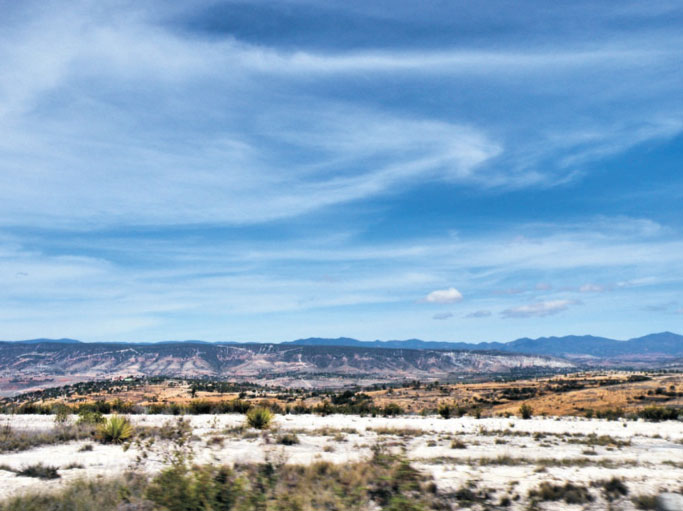
The Mixteca used to live in a highly forested area in Oaxaca, Mexico. Now, the area is suffering from deforestation and erosion.
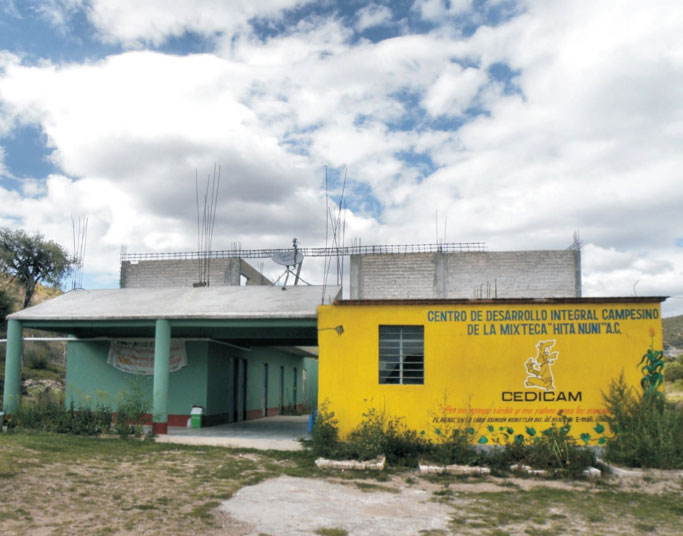
 Because of this, the Mixteca are said to live in one of the poorest areas of Mexico, and are said to have one of the highest emigration rates. Recently the Center for Integral Farmer Development (CEDICAM) has been attempting to replenish the area in order to give aid to the Oaxaca Valley. The CEDICAM is planning to help in these ways: reforestation and soil concentration, use sustainable agriculture, and aid in nutrition and health of the people.
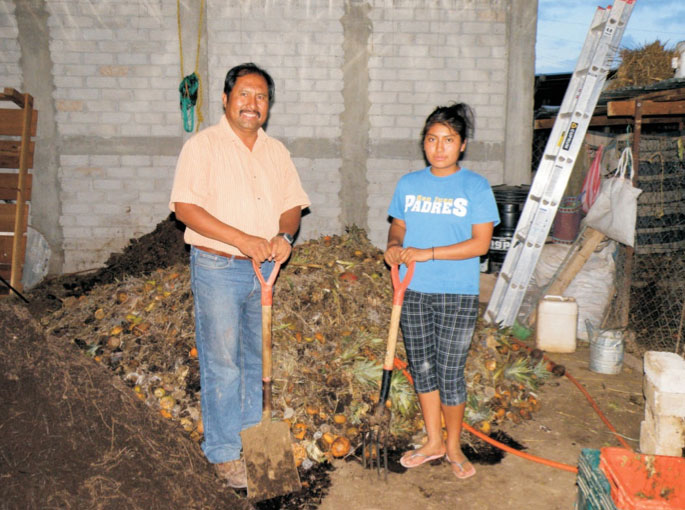
 Below is a picture of the founder of CEDICAM, Jesus Leon Santos and his daughter Diana.

This information was taken from the EcoTipping Points Project at http://www.ecotippingpoints.org/our-stories/indepth/mexico-oaxaca-community-reforestation-mixteca-region.html.
This information was taken from the EcoTipping Points Project at http://www.ecotippingpoints.org/our-stories/indepth/mexico-oaxaca-community-reforestation-mixteca-region.html.
Mixteca Lifestyle

This is a mortar and pestle. It's called a 'molcajete' and the smaller stone is called the 'tejolote'. They were used to grind corn and other foods. This one belonged to my paternal grandmother. It's made of volcanic rock.
 |
| My paternal aunt made this dress. This is traditional Mixteca dress but most of the younger generations wear Western style clothing. |
 |
| She did all the stitching herself |
Friday, November 16, 2012
Mixtecos and Migration
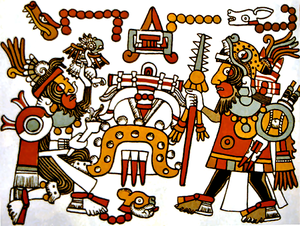
The Mixteco are one of the large ethnic groups with distinctive language and history. The Mixteco population is spread throughout three states in Mexico: Oaxaca, where most Mixtecos live, Guerrero, and Puebla. The Mixteco in the State of Oaxaca have been historically recognized and divided into three areas, Baja (low) and Alta (high) Mixteca and the coast. It is believed that the Mixtecos began populating this area between 6000 BCE and 700 B.C.E. Throughout this period continued technological transformation gave rise to a civilization that is very much Mixtec in nature. Around 1458 C.E. the Mexica, or Aztec, began military incursions into the area. After intensive negotiations the area came under the economic and political umbrella of the Aztec confederacy.

Mexico is a rich, ethnically diverse nation. It has hundreds of ethnic groups that areclosely and distantly related by custom and language. There are even groups that do not seem to fit in any one category and are unique in language and custom. The government has attempted to assimilate these many groups into the national culture and, at times, has been aggressive by purposely displacing whole communities.
The origin of indigenous migration is tied to the industrialization process in Mexico since the decade of the 1940s and to the rapid transformation of an agriculturally based economy to an urban industrialized economy. This change lowered the level of agricultural production in the indigenous areas that become even more marginal. At the same time that Mixtecs were being forced to leave their land, the agricultural industry in the United States was searching for new cheap labor sources. The Bracero Program (started in 1942 to cover World War II labor shortages) brought the first significant number of indigenous Mexicans to the U.S. Their numbers expanded greatly in the 70’s and 80’s, when many indigenous families were able to regularize their status through the 1986 Immigration and Reform Act.
Info taken from: http://ir.library.oregonstate.edu/xmlui/bitstream/handle/1957/3206/THESIS%20FINAL%20ELEC%20COPY%203.pdf?sequence=1
Wednesday, November 14, 2012
War and the Mixtec Social Class System
Social Class System:
The Mixtecs were arranged in an aristocracy, composed of the nobility and a massive common class. The common class consisted of farmers, tradesmen, artisans, and a smaller group of tenant farmers, servants, and slaves. Those of the aristocratic nobility were thought to have been subdivided into a ruling-caste family, and a groupf of nobles who served as administrators, assistants, and advisers for community rulers.
Warfare:
Localized skirmishes were often fought between neighboring communities. Engagements were fought over boundaries. Taking of Mixtec slaves would induce a fight among the people. Mixtecs allied with other communities to fight in the Spanish Conquest, also.
Their weaponry consisted of bows and arrows, macanas, spear-throwers, darts, and shields. The nobles wore padded cotton armor and often dressed elegantly for battle. Foot soldiers went into battle naked with face paint(Spores, pg 9 and 14).
Monday, November 5, 2012
Migration Documentary
http://www.youtube.com/watch?v=CvKcoslV3EA
This is a link to a YouTube video about the photographic documentary by Matt Black, showing the migration of the Mixteca people from Mexico to the United States.
This is a link to a YouTube video about the photographic documentary by Matt Black, showing the migration of the Mixteca people from Mexico to the United States.
Sunday, October 28, 2012
Sunday, October 21, 2012
Mixteca Family Structure
Mixteca family structure consists of the nuclear family. This is composed of the father, mother, and children. When the sons marry they will move onto their parents' property or somewhere nearby. Once parents grow old they often will move in with one of their sons and his family. If parents pass away then their brothers and sisters may move in as well. This is also true for orphaned neices or nephews.
The structure is patriarchal. The father is in charge of the decision-making and support of the family. He also works the family's parcel of land, looks after the animals, and may hire himself out as an agricultural or other wage worker. The mother is to take care of her husband, children, and home. They may at times also help out the men in the fields. Due to migration traditional family patterns and gender roles have changed. Women are finding themselves on their own for long stretches of time and so they have started to take on previously male roles.
Tequio means "service to the community". It is traditionally required of all men. It has become more common for women to stay at home to fulfill tequio.

The structure is patriarchal. The father is in charge of the decision-making and support of the family. He also works the family's parcel of land, looks after the animals, and may hire himself out as an agricultural or other wage worker. The mother is to take care of her husband, children, and home. They may at times also help out the men in the fields. Due to migration traditional family patterns and gender roles have changed. Women are finding themselves on their own for long stretches of time and so they have started to take on previously male roles.
Tequio means "service to the community". It is traditionally required of all men. It has become more common for women to stay at home to fulfill tequio.
Info and picture taken from: http://www-rohan.sdsu.edu/~mixtec/about.html#family
The Mixteca also have a hierarchical family structure. In the case that there is extra money the needs of the adults are attended to first, then the children's needs. The younger children are also to obey their older siblings whether they are still in the same household or not. Nonetheless there is cooperation and sharing of workload depending on each individual's role. Although individualism is valued, connection to ones family and village is very important.
Above info taken from: http://www.sandiego.edu/esl/teaching/cultures/mixtec/mixtec_bk.html
Wednesday, October 10, 2012
Pedro Meyer Photography


We value the maximization of benefits to indigenous peoples and vulnerable populations in the world.
We value the respect for persons all over the world.
We value the equal treatment of people, and we are against the exploitation of vulnerable groups around the world.
Subscribe to:
Comments (Atom)